DARMOWA DOSTAWA DLA ZAMÓWIEŃ POWYŻEJ 159ZŁ

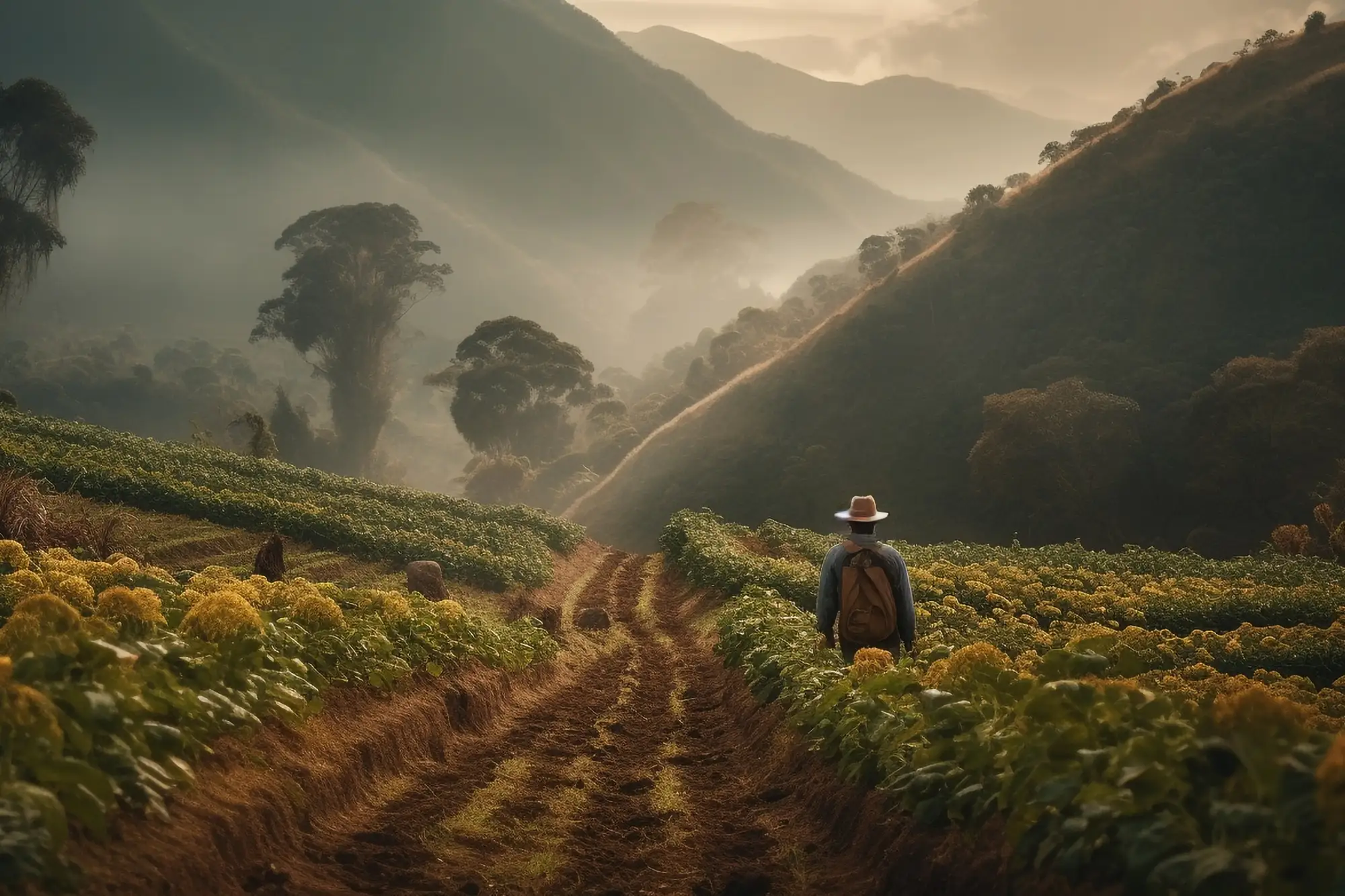
We invariably try to share our knowledge with you, so it's time to tell you about another piece of information you can find on our packaging - the height of coffee cultivation.
The altitude of the crop and the terrain have a huge impact on the taste of the coffee. When opening the coffee and pouring it into the grinder, we must remember that it comes from different bushes. Some grew more in the sun and others were covered by the shade of the surrounding trees. They received nutritional values from the bush to varying degrees. As with other crops, such as apples or pears, these elements affect the final flavor of both the coffee cherry and its beans, which are formed inside. In this post, we'll explore how the taste of coffee is affected by the altitude at which the coffee is grown.
Higher position creates grains with denser texture and richer flavor profile
Higher elevations produce hard, dense grains that are more highly valued than grains growing lower. Everything is related to a certain cycle that takes place every day. A coffee plant growing at higher elevations receives sunlight, but at the same time is surrounded by colder air. As a result, the coffee cherry has a very stable growth during the day, while due to a significant drop in temperature at night, the development of the fruit undergoes a temporary hibernation to start growing again the next day.
Coffee bushes also have better water drainage which prevents waterlogging of the roots and the plants themselves are planted at certain intervals, which helps fight the spread of diseases such as leaf rust.
What crops are called tall?
Altitude is, of course, a relative term. The highest grown coffees in Costa Rica can come from farms around 1350 meters above sea level, while Ethiopia has farms often above 1800 meters. Generally speaking, an altitude above 1350 is considered high enough to provide growing conditions that produce hard, dense beans.
Some regions and countries have technical terms that classify crops as high. For example, in Central America, coffee grown at altitudes above 900 meters is called "hard beans," and selections grown at altitudes above 1,300 meters are referred to as "very hard beans." Similarly, Mexico uses the term "altura" to refer to high-grown coffee, and Papua New Guinea, on the other side of the world, refers to coffee from the highest farms as "Mile High."
Different growing heights create different flavors
High altitude not only has an overall positive effect on coffee quality. Taking into account differences by region, batch and processing, some general flavors are associated with different altitudes.
Coffee grown under 750 meters will be generic - mild, with no particular distinctive flavor notes. It will be a flavor that is often found in packets from large roasters or in local supermarkets. Mostly it will be very low-growing Arabica from Brazil or Robusta.
Above 900 meters the flavors start to take shape. The coffee will be sweeter and have distinguishable notes. It will be a bean characterized by low acidity with a predominantly chocolate and nutty character. Mostly, it is a coffee from Brazil. It may vary in final taste due to the processing and the cultivated variety.
Above 1200 meters we can expect citrus notes, vanilla with chocolate sweetness or nutty aroma. 1200 meters is a popular plantation altitude in countries such as Costa Rica, Mexico, Nicaragua and Java.
When we grab for coffee growing above 1500 meters we will encounter very complex flavors and aromas. At this point, much more depends on the country the beans come from and the processing. There can be floral and fruity notes. Often with a touch of pleasant spices and a bright and pronounced acidity. These are the heights of cultivation popular in Colombia, Guatemala, Panama and Peru.
Time for dessert. Altitudes above 1800 meters open us up to a whole new experience. The coffee is characterized by a predominantly fruity flavor intermingled with rich floral notes. Often we can also detect the aroma of wine. Coffee from these altitudes tastes best in light roasts, as it further highlights the differences contained in the beans, showing the region of origin and the high quality of the processing.
Exceptions at lower altitudes
There are exceptions to what was said above about high altitudes and coffee. Coffee grown at lower altitudes can still develop interesting flavors and aromas, but the right conditions must be created to produce them. The most famous of the exceptions is Hawaiian Kona coffee (grown below 800 meters). Hawaii is so far north of the equator that its coffee is still excellent, even when grown at low altitude. Growing the bushes exclusively in the shade slows down the cherry ripening process, bringing out the fullness of flavor in the beans.
To see what difference height makes, try two coffees from different heights. You can look for them in our shop. They will have different flavors because they don't come from the same farm, but see if you notice a difference in overall quality as well. There is a good chance that you will.